


Updated 24 September 2026. For general education only. This article does not replace advice from your GP or dermatologist.
The short answer
Glycolic acid can help reduce shaving bumps and ingrown hairs by clearing the dead skin that traps regrowing hair. The strongest evidence comes from placebo-controlled trials on the beard area, where it reduced razor bump lesions by more than 60 per cent. No study has tested legs specifically, so treat it as a sensible, low-cost step, timed away from fresh shaves and waxing, and backed by good shaving technique.
Spring is when this question comes up most in Australia. Legs and underarms come out, shaving frequency goes up, and so do the bumps. Here is what the research supports, what it does not, and how to fit an acid into a hair-removal routine without making things worse.
Why shaved skin gets bumpy
After shaving, a cut hair has a sharp tip. If the follicle opening is partly blocked by dead skin, or the hair curls as it grows, the tip can turn back into the skin instead of growing out. The body treats it as a foreign object, and you get a red or skin-coloured bump. Curly or coarse hair and frequent close shaving raise the risk.
The piece most people miss is the dead skin. Body skin renews more slowly than the face, so build-up around follicles is common on legs, underarms and the bikini line. That build-up is the part an exfoliating acid can change. For the background on how that renewal works, see skin cell turnover explained for body skin.
Not every bump is an ingrown hair
Shaved legs can show several look-alike problems. Getting this right matters because they respond differently.
| What you see | Likely cause | Does exfoliation help the look of it? |
|---|---|---|
| Red bump with a hair visible under or looping into the skin | Ingrown hair | Often, as part of prevention |
| Dark dots at follicle openings | Strawberry legs (trapped oil and dead skin, shaving irritation, or regrowth) | Often |
| Small rough bumps like sandpaper, present whether or not you shave | Keratosis pilaris | Often, with consistent use |
| Tender pus-filled spots, clusters, or heat and spreading redness | Folliculitis or infection | No. See your GP |
If your bumps are there year-round and feel rough rather than sore, keratosis pilaris is the more likely driver. Our strawberry skin and keratosis pilaris guide covers that in depth.
What the evidence actually shows
Most articles on this topic cite one study and stop there. It is worth being precise about what that study did, because it tells you how far the result can be stretched.
- The core trial. In 1993, two placebo-controlled trials in 35 adult men with razor bumps in the beard area found glycolic acid lotion was significantly more effective than placebo, with more than a 60 per cent reduction in lesions on the treated side. Participants were able to keep shaving daily with little irritation.
- Later review. A 2024 narrative review of hair-removal practices notes that a post-shave 8 per cent glycolic acid lotion reduced bumps and pustules within about two weeks, and recommends glycolic or salicylic acid after shaving, while flagging that some skin types find these acids irritating.
- The proposed mechanism. Beyond exfoliation, glycolic acid may soften bonds within the hair shaft so regrowing hair is less likely to curl back into the skin. Researchers describe this as likely rather than proven.
What this does not tell us. The trials were small, older, done on faces rather than legs, and in men only. There is no published trial on legs, underarms or the bikini line. The mechanism is the same wherever you shave, so the result is a reasonable guide, but it is an inference, not a direct finding. Anyone promising a set percentage reduction on your legs is quoting a beard study.
How to time glycolic acid around hair removal
Timing is where most people go wrong. Acid on freshly broken skin stings, and acid before waxing can make skin lift.
| Hair removal | When to use glycolic acid | Why |
|---|---|---|
| Razor shaving | Shave in the morning, apply in the evening, or apply on non-shave nights | Gives micro-nicks time to settle before acid touches them |
| Waxing | Pause for a day or two before and after, or as your salon advises | Acid-exfoliated skin is more likely to lift or tear under wax |
| Epilating | Same as waxing | Hair is pulled from the root, leaving open follicles |
| Laser or IPL | Follow your clinic's instructions, which usually include pausing acids on the area beforehand | Reduces the risk of reactions to treatment |
| Electric trimmer | Usually fine as normal | Cuts above the skin, so less surface damage |
For general use guidance, including where not to apply an acid, see glycolic acid for body skin: how to use it and what to avoid.
A simple spring routine for smoother shaved skin
- Soften first. Shave at the end of a warm shower so the hair and skin are hydrated.
- Use a gel or cream, not soap, and a sharp blade. The American Academy of Dermatology suggests replacing blades or disposables after five to seven shaves.
- Shave with the direction of hair growth and rinse the blade after each stroke. If bumps persist, dermatologists suggest trying a single or two-blade razor and not pulling the skin tight.
- Exfoliate that evening, not straight after. Apply a leave-on glycolic acid lotion to clean, dry, unbroken skin. Start every second or third evening and build up as your skin allows.
- Protect by day. Glycolic acid can temporarily increase sun sensitivity, and spring UV in Australia is often higher than it feels. Use a broad-spectrum SPF 50+ on exposed treated skin. More detail in glycolic acid and the sun.
- Leave bumps alone. Picking or digging out hairs can introduce bacteria and leave marks.
Expect gradual change rather than overnight results. How long that takes depends on your skin's renewal cycle, covered in how long glycolic acid takes to work on the body.
Glycolic or salicylic acid?
Both appear in razor bump guidance. Glycolic acid is water-soluble and works on the skin surface, which suits dry, rough, shaved areas like shins. Salicylic acid is oil-soluble, reaches into oily follicles and has a calming effect, which suits oilier areas prone to breakouts. Some people alternate. Our guide to choosing a body acid compares them side by side.
A note for medium and deeper skin tones
Ingrown hairs can leave dark marks after the bump settles, and these are more noticeable and slower to fade on medium and deeper skin. Irritation from over-exfoliating can cause the same marks. Go slowly, keep the skin barrier comfortable, and stop if you see ongoing redness or stinging. Why the barrier matters is explained in body skin barrier function.
When to see your GP or a dermatologist
A cosmetic lotion is not designed to manage infection or inflammatory skin conditions. Book in if bumps are painful, filled with pus, spreading, hot to touch, keep returning in the same spot, or are leaving dark marks or scars. Persistent razor bumps are treatable, and prescription options exist.
Where The Lotion fits
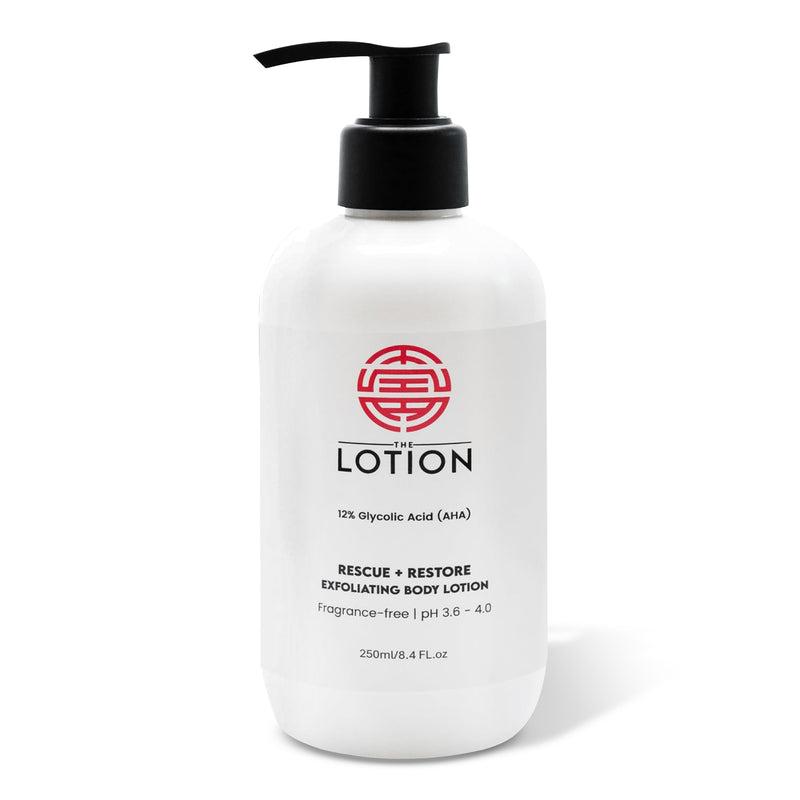
The Lotion is a leave-on 12 per cent glycolic acid body lotion, formulated at a pH of 3.6 to 4.0 with urea, niacinamide and shea butter, fragrance-free and made in Australia. It is a cosmetic, designed to improve the appearance of rough, bumpy texture on areas like legs and arms. That is a higher concentration than the 8 per cent lotions used in the razor bump research, so introduce it gradually on shaved areas and keep it off freshly shaved or broken skin.
Frequently asked questions
Does glycolic acid help ingrown hairs on the legs?
The best evidence comes from the beard area, where placebo-controlled trials found glycolic acid lotion reduced razor bump lesions by more than 60 per cent. No trial has tested legs specifically, but the mechanism, clearing dead skin that traps regrowing hair, is the same wherever you shave. It is a reasonable, low-cost step, not a guarantee.
Can I put glycolic acid on straight after shaving?
It is better not to. Freshly shaved skin has tiny breaks in its surface, so acid is more likely to sting. Shave in the morning and apply in the evening, or apply on nights you do not shave. Skip any nicked or broken skin.
Should I use glycolic acid before or after waxing?
Around waxing, pause it. Most salons ask you to stop exfoliating acids for a day or two either side of a wax, because acid-exfoliated skin is more likely to lift or tear. Follow your salon's instructions, then return to it once the skin has settled.
Is glycolic acid or salicylic acid better for ingrown hairs?
Both are used. Glycolic acid is water-soluble and smooths the surface where hair gets trapped. Salicylic acid is oil-soluble, works inside oily follicles and has a calming effect. Glycolic suits dry, rough shaved skin. Salicylic suits oilier, breakout-prone areas.
Are strawberry legs the same as ingrown hairs?
Not quite. Strawberry legs describes dark dots at the follicle openings, which can come from trapped oil and dead skin, shaving irritation, keratosis pilaris or ingrown hairs. Ingrown hairs are one possible cause, which is why the same exfoliating routine often helps the overall appearance.
When should I see a doctor about ingrown hairs?
See your GP or a dermatologist if bumps are painful, filled with pus, spreading, hot to touch, keep coming back in the same spot, or leave dark marks or scarring. Those signs point to infection or inflammation that a cosmetic lotion is not designed to manage.
References
- Perricone NV. Treatment of pseudofolliculitis barbae with topical glycolic acid: a report of two studies. Cutis. 1993;52(4):232-235. PubMed 8261811
- American Academy of Dermatology. Hair removal: how to shave. aad.org
- American Academy of Dermatology. Razor bumps. aad.org
- Insights into the role of grooming modifications and preventative approaches in pseudofolliculitis barbae: a narrative review of hair removal practices. 2024. ScienceDirect


